Books
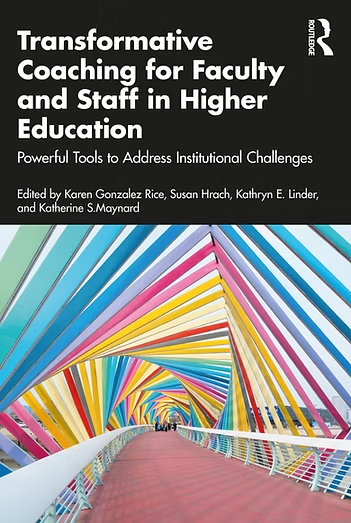
Transformative Coaching for Faculty and Staff in Higher Education: Powerful Tools to Address Institutional Challenges
Book edited By Karen Gonzalez Rice, Susan Hrach, Kathryn E. Linder, and Katherine S. Maynard
Routledge, 2026
Read a description of the book
Embracing coaching as a powerful tool for growth and change, this edited collection demonstrates the value of robust coaching communities in higher education and explores the possibilities and challenges of coaching faculty and staff in academia.
This lively book draws on the expertise of seasoned academic coaches to provide a rich, multi-faceted exploration of its potential to drive individual transformation and institutional success. With insights grounded in diverse roles and perspectives, readers will learn the ins and outs of developing and tailoring coaching programming for varied goals in different institutional contexts. From creating authentic connections and building resilience to promoting inclusivity and inspiring structural change, this book is packed with the practical tools, real-life examples, and thought-provoking reflection questions necessary to develop a core, functional understanding of coaching in higher education.
This innovative guide is for current and potential coaches as well as any higher education professional who is curious about leveraging the transformative power of coaching for lasting impact.
Long Suffering: American Endurance Art as Prophetic Witness
Book by Karen Gonzalez Rice
University of Michigan Press, 2016

2025
In Praise of Embarrassment
Article by Karen Gonzalez Rice
Archives of American Art Journal
Read the abstract
In 1974, Mierle Laderman Ukeles performed It’s Okay to Have a Babysitter (Including Long Distance Calls): Some Kinds of Maintenance Cancel Out Others: Keep Your Head Together – 1,000 Times as part of curator Lucy Lippard’s exhibition c. 7500 at the Institute of Contemporary Art in Boston. In this early action, Ukeles drew attention to the invisible labor—the child care maintenance—that facilitated her own art practice, and to her own ambivalence about it. Looking back at this performance, she described it as “slightly embarrassing.” In this essay, I take the artist’s admission of discomfort as the starting point for a reflection on what is awkward and uncomfortable in the study of American art, how self-consciousness connects with consciousness-raising, and what embarrassment might teach us about living with and through American art and archives in the 21st century. I consider the artwork that so chagrined Ukeles, a cringe-inducing oral history with painter Morris Broderson, and artist Howardena Pindell’s perspective on embarrassing whiteness in order to explore how embarrassment can mark opportunities for generative, relational encounters with artists, objects, materials, histories—and with ourselves as scholars and humans.
2024
Siting Broken Obelisk: Public Art, Whiteness, and the Rothko Chapel
Book chapter by Karen Gonzalez Rice in Revisiting the Rothko Chapel edited by Annie Cohen-Solal and Aaron Rosen
Brepols Publishers
Read the abstract
Barnett Newman’s Broken Obelisk generated controversy in Houston even before its installation in front of the Rothko Chapel, inviting dialogue about representation and abstraction, troubling assumptions about whiteness and race, intervening in dogma and ecumenism, and challenging the primacy of legalistic interpretations versus moral imperatives in the context of Cold War American identity.
Though the obelisk has become a beloved Houston landmark at the Rothko Chapel, John and Dominique de Menil originally proposed bringing Broken Obelisk to downtown Houston as a public artwork. With this advocacy, the de Menils embarked on a project that threatened their association with the Houston city government, their connections with arts leaders at the National Endowment for the Arts, and their relationship with Barnett Newman. To address the complexities of this conflict, this chapter incorporates such diverse sources as city council records, Rothko Chapel archives, and personal letters, as well as interviews and opinion pieces that capture public and institutional memory and rumor, clarifying how the controversy surrounding Broken Obelisk activated tensions in Houston around race relations, highlighted assumptions about whiteness, and raised conflicting opinions about the uses of abstraction in contemporary art and life.
2023
The Dialogic of Trauma: Relationships, Bearing Witness, and Higher Education
Article by Mays Imad and Karen Gonzalez Rice
The Journal of Faculty Development, 37.3 (September 2023), pages 64-68
Read the abstract
Trauma-informed teaching and learning has gained a great deal of prominence in higher education over the past three years. Typical approaches to trauma-informed work often start with a generalized set of ideas and principles that are then applied to very individualized and contexts. In this article, written as a dialogue between two educational developers and trauma-informed pedagogy experts, we reverse this process, beginning with meditations on our individual experiences of trauma and allowing that conversation to inductively lead us to new ideas about trauma-informed care and healing, especially in the context of higher education.
Revisiting ‘Art in the Dark’: Thomas McEvilley, Performance Art, and the End(s) of Shamanism
Book chapter by Karen Gonzalez Rice in Religion and Contemporary Art: A Curious Accord, edited by Rachel Smith and Ron Bernier
Routledge, pages 194-206
Read the abstract
In 1983, Thomas McEvilley’s essay “Art in the Dark” appeared in Artforum as the first theory of performance art to explore the medium’s origins, function, and significance in terms of religion. In this wide-ranging consideration of the state of performance art, he argued that performance artists act as shamans, communities’ designated transgressors of traditional boundaries. This chapter revisits this influential essay to acknowledge McEvilley’s innovative, important work, to locate his claims within the real conditions of intellectual, social, and religious histories in the 1960s and 1970s including psychoanalysis and the counterculture, and to call for the end of shamanism and other generalized religious references within performance art discourses.
2020
Anatomy of a Revival
Book chapter by Karen Gonzalez Rice in Queer Communion: Ron Athey, edited by Amelia Jones and Andy Campbell
Intellect Books, pages 224-231
Read the abstract
Ron Athey’s performances directly display, re-invent, and re-present the visual language, subject matter, and meanings of 1970s Southern California Pentecostal healing revivals.Athey’s performances echo and re-stage these dramas of affliction, salvation, and renewal. His Torture Trilogy performances, in particular, are dense with simultaneous actions, anxiety, and extreme physicality, referencing and revivifying revival rhetoric.
2017
Recuperating Religion in Art History: Contemporary Art History, Performance, and Christian Jankowski’s The Holy Artwork
by Karen Gonzalez Rice
Performance Matters, 3.1, pages 112-115
Read the abstract
In this contribution to an interdisciplinary discussion of religion and performance, I share my art historical approach to endurance art and other high-stakes performance actions, which in my view draw their prophetic power from artists’ religious commitments, embodied worship practices, and visual traditions of religious dissent. My approach to studying the imbrication of performance art and religion is informed by deep histories of art historical attention to religious iconography, religious practice, and religious representation stretching from the Renaissance. Despite these roots, art historical discourses around contemporary art generally have insisted on secular interpretations; religion has become a taboo subject in contemporary art history, especially in regard to avant-garde practices like performance art. This position statement discusses how I navigate the study of religiously-inflected art actions within a field committed to the secularization thesis. With a brief exploration of Christian Jankowski’s Holy Artwork (2001)—which staged a seemingly unorthodox encounter between an American evangelical preacher and a German contemporary artist—I explore the benefits, challenges, and implications of mobilizing traditional art historical methodologies in the interpretation of performance art, and I argue for the recuperation of religion as a crucial area of contemporary art historical concern.
An Infection of Theology: An Annotated Interview with Ron Athey
Article by Karen Gonzalez Rice
E-misférica 13.1
Read the abstract
In this collection of comments from a conversation that took place in his Silverlake studio on August 15, 2007, performance artist Ron Athey, sketched vivid outlines of his Pentecostal childhood and discussed its impact on his performance art. Athey recalled a chaotic, high-stakes, and deeply-felt religious experience rooted in the bodies of believers. As a young child in Southern California in the 1970s, Athey regularly attended worship services in a range of Pentecostal settings, from tent-revival healing revivals to tiny storefront churches to late-night prayer sessions in his grandmother’s living room. Across these locations, he witnessed the collective experiences of uninhibited dancing, convulsing, and vocalizing that for Pentecostals signals divine presence and provides evidence of one’s communion with God. At the margins, beyond the reach of Pentecostal denominational hierarchies, these diverse religious communities delivered eccentric, immediate, and powerful worship experiences that, even years after leaving the faith, have continued to resonate with Athey and shape his performances.
2014
‘No Pictures:’ Blind Date and Abject Masculinity
Article by Karen Gonzalez Rice
Performance Research, 19.1, pages 15-24
Read the abstract
This article analyzes early works by performance artist John Duncan to frame how his prolonged, critical engagement with issues of gender and power shaped the forms and content of his controversial performance Blind Date (1980). Throughout his 1970s art practice, Duncan developed a harsh critique of masculinity rooted in his childhood experiences as a victim of male sexual predation. He advanced this early deconstruction of masculinity during his crucial encounter with feminist artists in Los Angeles in the early 1970s. Through critical attention to both of these foundational experiences, this article traces the formation of Duncan’s ideological project and its culmination in Blind Date.
Cocking the Trigger: Explicit Male Performance and its Consequences
Book chapter by Karen Gonzalez Rice in Scenes of the Obscene: Representations of Obscenity in Art, Middle Ages to Today, edited by Kassandra Nakas and Jessica Ullrich
Verlag und Datenbank für Geisteswissenschaften, pages 147-162
Read the abstract
The 1970s Southern California art scene yielded some of the best-known, riskiest, and most transgressive artworks in the history of performance art. In works like Chris Burden’s Shoot (1971) and Barbara T. Smith’s Feed Me (1973), artists experimented with situations of escalating risk, inviting physical and psychic harm. Obscenity and violence frequently were used as aesthetic strategies, and artists performed with a heightened sense of the high stakes of artistic practice. In this essay, I explore the performances of three male artists working in the Southern California avant-garde during this key moment. Wolfgang Stoerchle, John Duncan, and Paul McCarthy explicitly tackled issues of male sexuality, aggression, and vulnerability. They used parallel, sexually explicit performance practices, and they shared audiences; yet their performances garnered wildly different responses. To excavate the sources of these disparate reactions, this essay analyzes these artists’ critiques of masculinities as represented in key performance artworks. I consider how each artist’s actions echoed or departed from gender constructs, and how these points of view may have impacted responses to their works. Finally, I gesture to these gendered assumptions as they have endured to the present within art historical discourses about explicit male performance.
Dominic Johnson, ed., Pleading in the Blood: The Art & Performances of Ron Athey
Book review by Karen Gonzalez Rice
CAA.Reviews
2013
The Deconstructive Impulse: Women Artists Reconfigure the Signs of Power, 1973–1991 edited by Nancy Princenthal
Book review by Karen Gonzalez Rice
Women’s Art Journal, 34.2, pages 56-57
2012
Guy / Not Guy: Guarino’s Collaged Masculinities
Exhibition catalog essay by Karen Gonzalez Rice in Brad Guarino: What Manner of Men?
Real Art Ways
Ambivalent Shelter
Exhibition catalog essay by Karen Gonzalez Rice in Greg Bailey: Cognitive Dissonance: By Degree of Measure
Three Rivers Gallery
2010
Linda Montano and the Tensions of Monasticism
Book chapter by Karen Gonzalez Rice in Beyond Belief: Theoaesthetics or Just Old-Time Religion? edited by Ronald R. Bernier
Wipf and Stock / Pickwick Publications, pages 25-43
Read the abstract
In this chapter, I theorize Montano’s performance art in terms of her experience as a novice in the Maryknoll Catholic convent between 1960 and 1962. To explore the ways in which conceptual and bodily practices of monasticism manifested in her performance actions, I address Montano’s collaborative performance with artist Tehching Hsieh, Art / Life One Year Performance 1983-1984, in which she and Hsieh remained tied together by an eight-foot rope for one year (1983-4), and 7 Years of Living Art (1984-91), a performance that highlighted the activities of daily life as art. Ultimately, I will suggest that Montano’s performance actions enact the commitments of and certain tensions within monasticism.
Read a description of the book
Beyond Belief: Theoaesthetics or Just Old-Time Religion? explores the possible reemergence of a theological dimension to contemporary art. Long estranged from symbol and sacrament, contemporary artists–and those who think and write about them–seem to have turned once again to a vision rooted in the sacred. In an era marked culturally by world-weary cynicism and self-conscious irony, a new “humanism” may be emerging, one which aims to move beyond fragmentation and opposition to integration and unification. The aim of this book is not to propose a resurgence of religious iconography, but rather to give voice to long-suppressed–often maligned, and certainly professionally risky–positions informed by and reverberating with themes of the sacred. The essays included here, by a range of scholars working on these issues today, originated as a lively and spirited session of the 2008 College Art Association annual conference.
Radical Gestures: Feminism and Performance Art in North America, by Jayne Wark
Book review by Karen Gonzalez Rice
Women’s Art Journal, 31.1, Pages 60-61
2006
Stephen Antonakos; Jim Dine; Robert Indiana; Raymond Parker; Dee Wolf
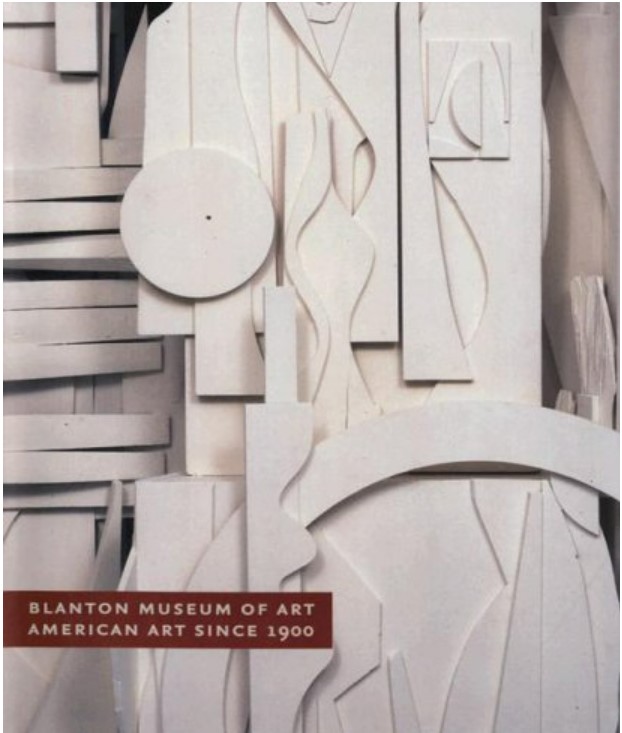
Exhibition Catalog Essays in Blanton Museum of Art: American Art since 1900 edited by AD Carlozzi and K Baum
University of Texas Press, Pages 30, 84, 140, 238, 330-331
2005
Mapping the Contemporary Body: MichelleLach.com
Website Review by Karen Gonzalez Rice
Women and Performance, 29
2004
Optimo: Manifestations of Optimism in Contemporary Art
Exhibition Review by Karen Gonzalez Rice
Art Lies, 43, Pages 100-101
Going West
Exhibition Review by Karen Gonzalez Rice
Art Lies, 43, Pages 70-71
 Karen Gonzalez Rice